Strategic Framework: Porter’s Five Forces of Profitability
Competition isn't about size, it's about profitability. Learn how Porter's Five Forces reveals the hidden threats to your margins. Includes a free PDF guide and strategic audit worksheet.

Introduction
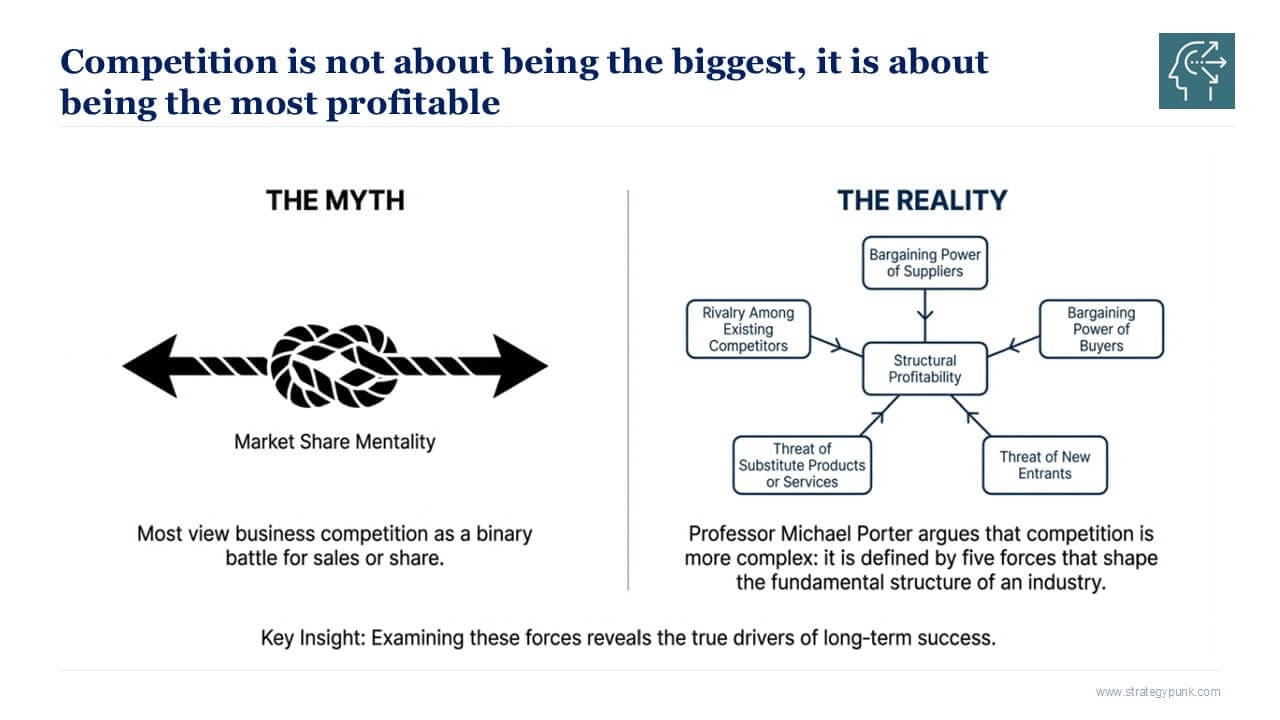
Most executives view competition as a simple tug-of-war—a binary struggle for market share and sales volume against the rival across the street.
However, this perspective is dangerously narrow. According to Michael Porter, the legendary Harvard Business School professor, competition is not a battle for size; it is a battle for profitability.
The most lethal threats to your bottom line often aren't even in your industry, and the structural forces at play are far more complex than a race for "the biggest" slice of the pie.
The Profitability Paradox: Why Size is a Strategic Trap
In the boardroom, growth is often treated as the ultimate KPI. Yet, pursuing scale without a clear view of industry structure is a recipe for disaster. Growth is a vanity metric; profitability is a sanity metric.
Porter’s framework forces a radical shift in a leader's focus from "beating the guy next to me" to protecting the value the business creates.
It's not about who's the biggest, it's about who is the most profitable.
Strategically, this shift changes everything. Instead of an obsessive focus on horizontal rivals, a leader must neutralize the power of all external players seeking to siphon off margin.
A strategy that increases market share but leaves the company vulnerable to supplier demands or buyer price-gouging is not a strategy—it is a slow-motion liquidation.
The Vertical Squeeze: The Invisible Rivalry of Buyers and Suppliers
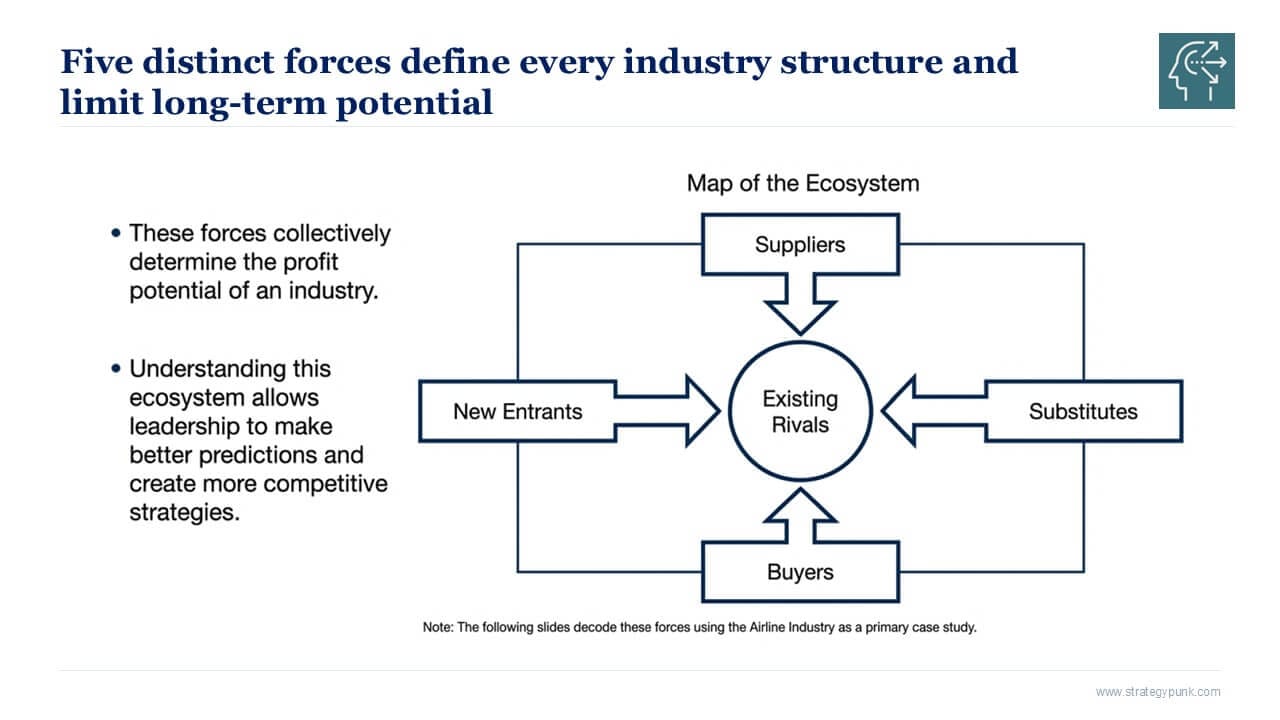
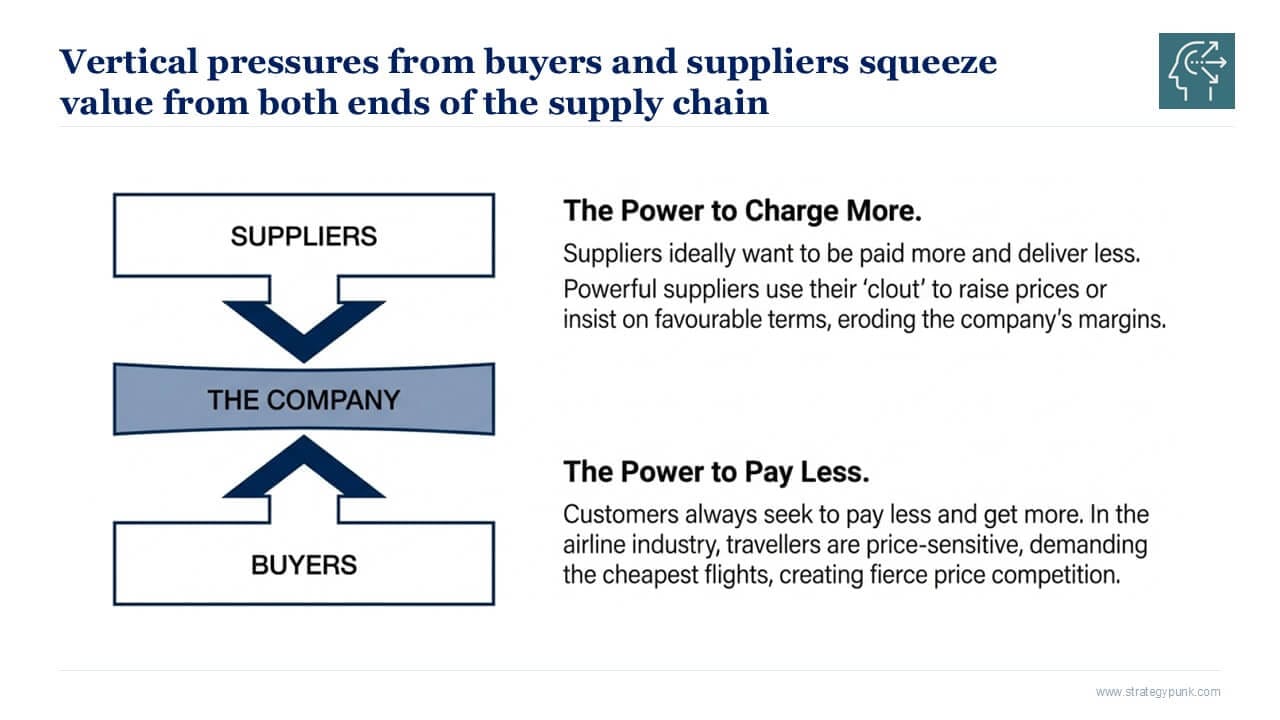
Competition is as much vertical as it is horizontal. Your customers and vendors are active participants in a struggle for your profit.
Buyers inherently want to "pay less and get more," creating constant downward pressure on pricing. This is the central tragedy of the airline industry. Because travelers are often motivated solely by the lowest price, the buyers hold the power, and carriers are forced into a race to the bottom.
Conversely, suppliers want to "be paid more and deliver less." Powerful suppliers use their market clout to dictate terms that favor their own margins over yours. To counter this, a strategic pivot is required: leaders must diversify their supply chains or create enough unique value that they regain the leverage to dictate, rather than take, terms.
The Stealth Threat: Why Substitutes Are Your Deadliest Rivals
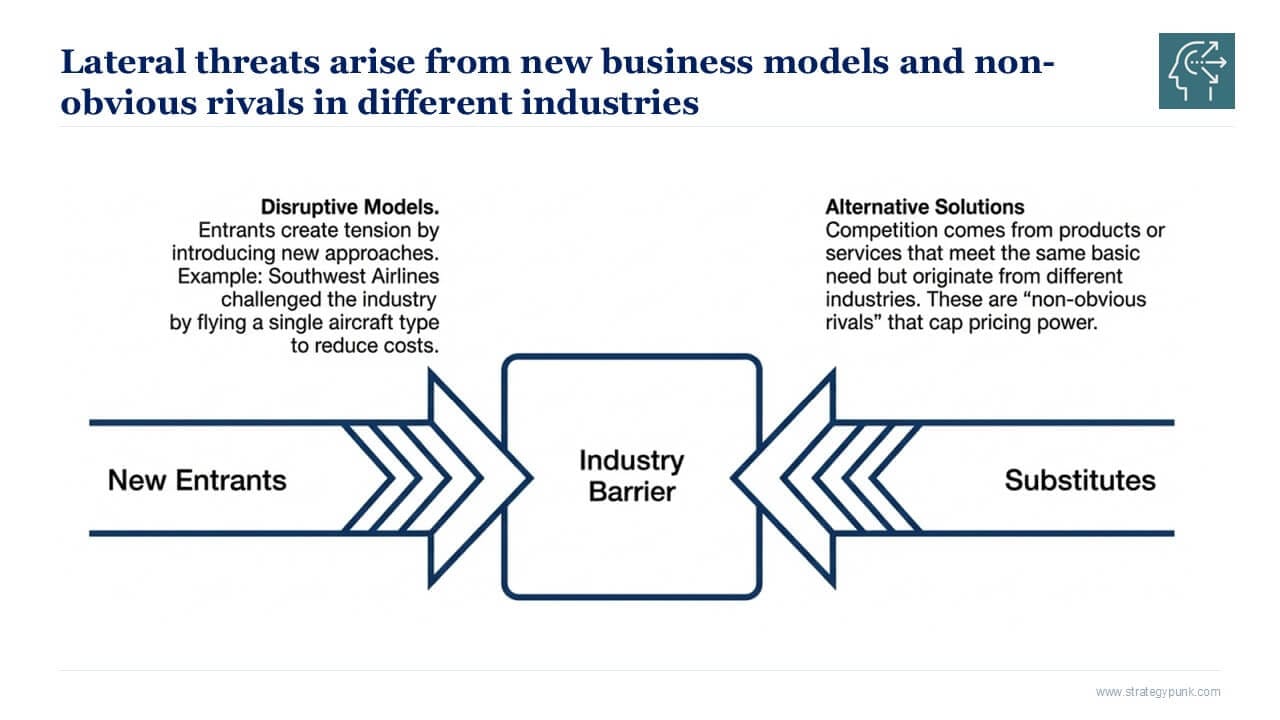
A substitute is not a direct rival offering a similar product; it is a product from a different industry that satisfies the "same basic need." Because these threats don't look like traditional competitors, they often go unnoticed until it is too late.
The toughest competitors may come from different industries.
This is counterintuitive because managers often focus on product categories rather than the "job to be done." If a customer finds a different way to satisfy their core need via a cross-industry innovation, your industry-specific advantages vanish overnight. Strategic leaders must look beyond their sector to identify what could make their entire business model obsolete.
The High Cost of Entry and the War of Attrition
New entrants and existing rivals create a pincer movement on profitability. When Southwest Airlines entered the market flying only one aircraft type, they didn't just compete; they changed the cost of admission. By drastically reducing operational costs, they forced legacy carriers to spend heavily on defensive pivots to their business models to remain relevant.
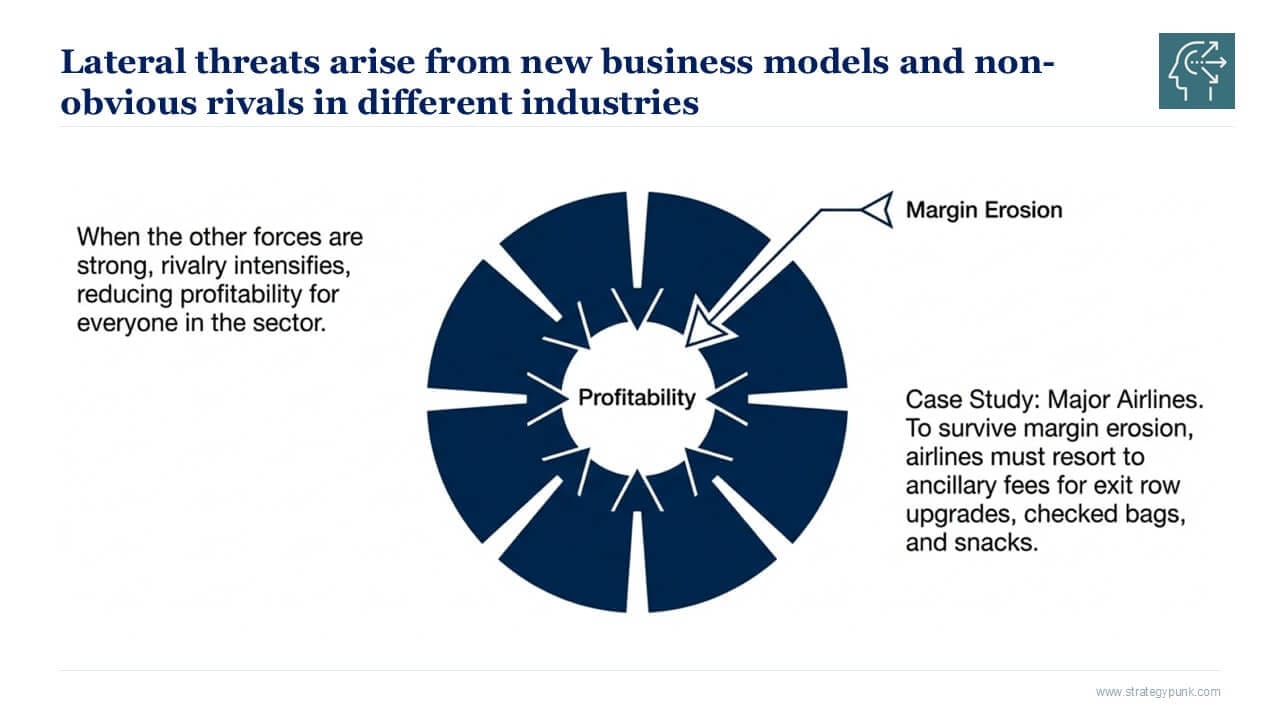
When all five forces — buyers, suppliers, substitutes, new entrants, and rivals — press inward simultaneously, profitability collapses. The airline industry is the ultimate example of this structural trap. To survive years of intense rivalry and narrow margins, companies have been forced into a desperate reliance on auxiliary fees for bags, snacks, and seat upgrades. These aren't just "extra" charges; they are defensive measures intended to salvage a bottom line that the five forces have otherwise decimated.
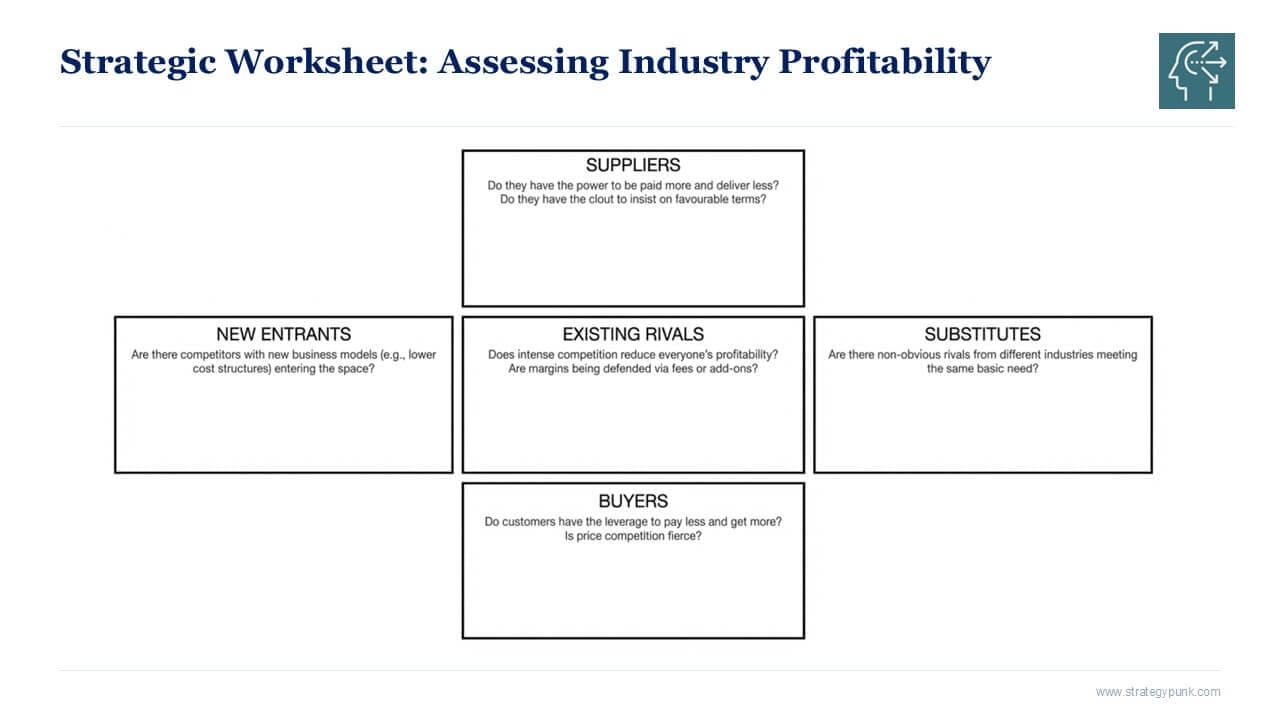
Interactive Worksheet: The Five Forces Audit Template
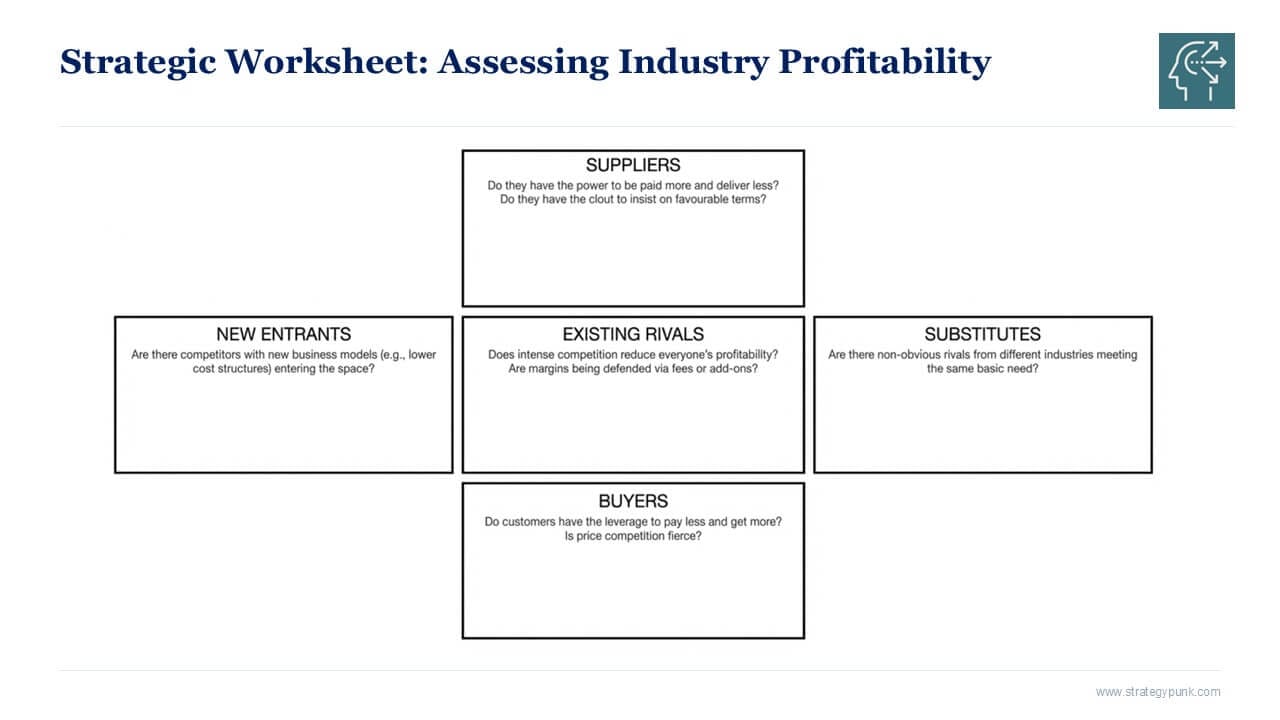
Use this diagnostic tool to identify which forces are currently holding your margins hostage.
Force | Key Diagnostic Question | Current Impact (High/Med/Low) |
Buyer Power | Are our customers price-sensitive enough to dictate our margins? | |
Supplier Power | How easily could our vendors hold our profitability hostage? | |
Threat of Substitutes | What external industries are solving our customers' "jobs to be done"? | |
Threat of New Entrants | Are low-cost disruptors forcing us into defensive capital expenditures? | |
Industry Rivalry | Is our competition a race to the bottom that erodes the industry's total value? |
Download this Strategic Framework as a Free PDF
Strategic Framework: Porter’s Five Forces of Profitability (Free PDF Guide)
Conclusion and Forward-Looking Summary
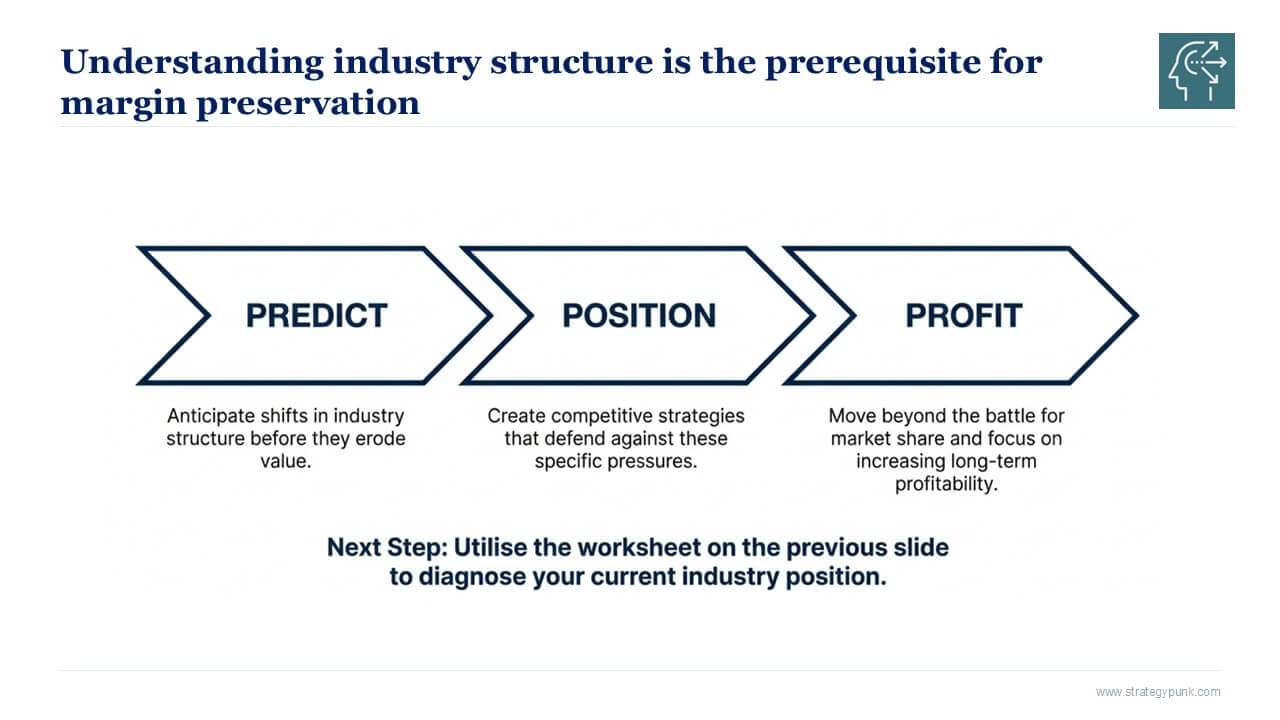
The Five Forces framework is not a static academic exercise; it is a predictive tool.
By diagnosing where profit is being drained, a leader can move from reactive firefighting to proactive positioning.
True competitive advantage comes from building a strategy that doesn't just chase growth, but structurally defends the value you create.
Is your current strategy defending your profit, or just your pride?