Meta SWOT Analysis: The $1.7T Open-Source AI Bet
Meta is monetising attention at a civilizational scale. Discover the strengths, weaknesses, opportunities, and threats defining the $1.7T social media and AI giant. Free PDF.

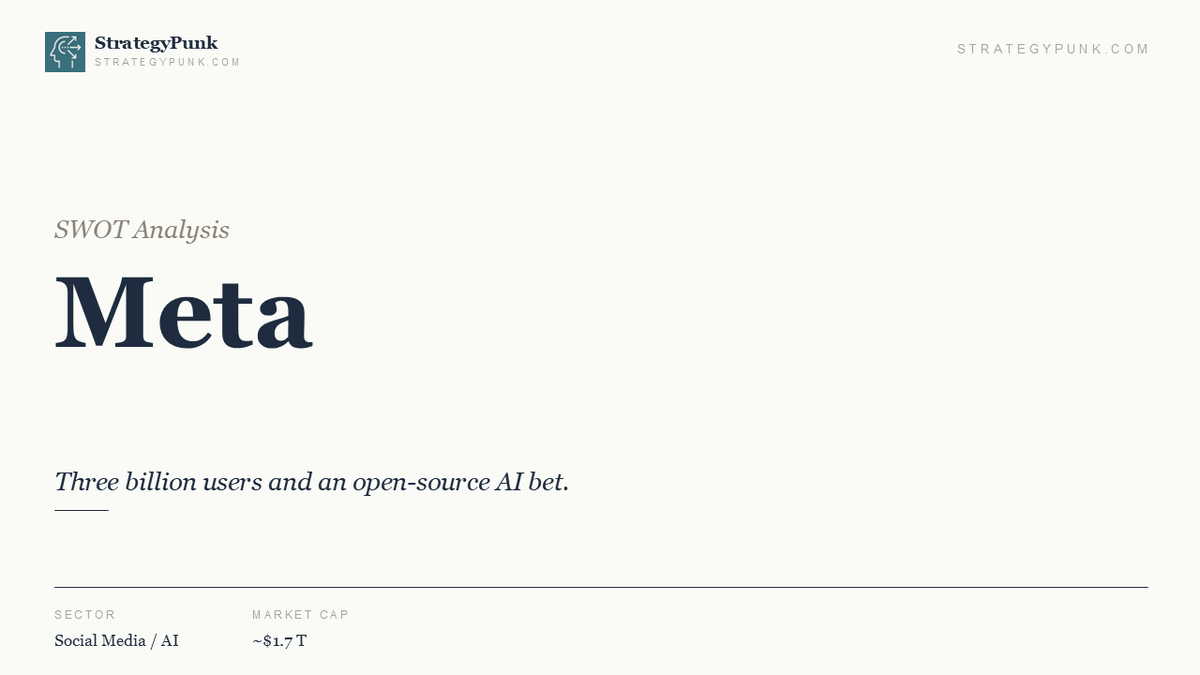
Meta monetizes attention at a civilizational scale. With a market cap hovering around $1.7 trillion and 3.3 billion daily active users across Facebook, Instagram, and WhatsApp, the ad machine has never been stronger. But the landscape is shifting. Mark Zuckerberg’s pivot from the metaverse to open-source AI is a bold, strategic hedge that could redefine the tech ecosystem.
We analyzed Meta’s current strategic position. Here are the most impactful takeaways from our latest SWOT matrix.
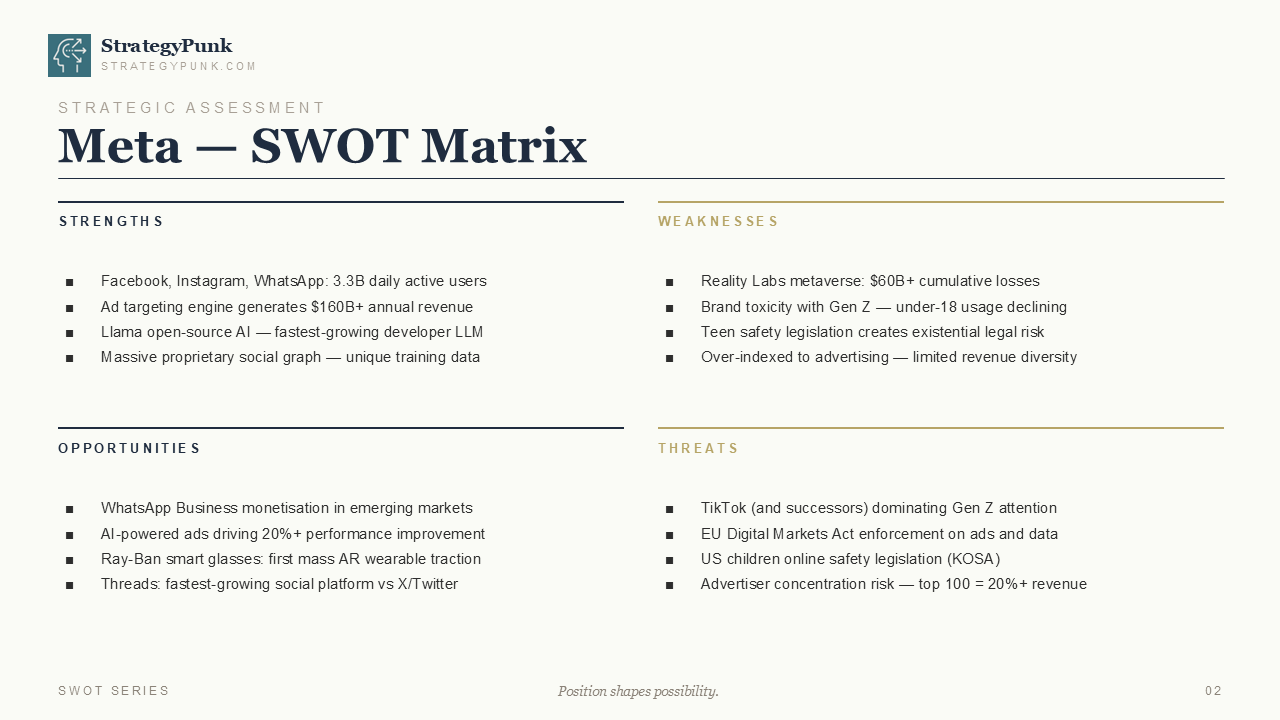
Strengths: The Unmatched Social Graph
Meta’s core advantage remains its unprecedented reach. The ad targeting engine generates over $160 billion in annual revenue, fueled by a massive, proprietary social graph. This data is the ultimate training ground for AI.
The real surprise is Llama. Meta’s open-source large language model is the fastest-growing developer LLM, creating a moat that directly challenges closed ecosystems like OpenAI and Google. Meta is giving away the infrastructure to own the ecosystem.
Weaknesses: The Gen Z Problem and the Metaverse Drain
Reality Labs is an expensive strategic hedge. Cumulative losses exceed $60 billion. While Mark Zuckerberg remains committed to spatial computing, the financial drag is undeniable.
A more pressing issue is brand toxicity with Gen Z. Under-18 usage is declining. Teen safety legislation poses an existential legal risk. Meta is also over-indexed to advertising, leaving it vulnerable to market fluctuations with limited revenue diversity.
Opportunities: AI Amplification and Hardware Traction
The social graph is the asset. AI is the amplifier. AI-powered ads are driving a 20%+ performance improvement, proving that Meta’s algorithms are getting smarter at extracting value from user attention.
WhatsApp Business monetization in emerging markets represents a massive, untapped revenue stream. Threads has emerged as the fastest-growing social platform against X/Twitter. And the Ray-Ban smart glasses are showing the first signs of mass-market AR-wearable traction, bridging the gap between the digital and physical world without the friction of a VR headset.
Threats: Regulatory Tipping Points and Attention Wars
TikTok and its successors continue to dominate Gen Z attention. Winning back this demographic is critical.
Regulatory pressure is mounting. The EU Digital Markets Act's enforcement of ads and data, alongside US children's online safety legislation (KOSA), could force structural changes to Meta’s ad model. Advertiser concentration is another hidden risk, with the top 100 advertisers accounting for over 20% of revenue.
The Watch List: Three Things to Monitor
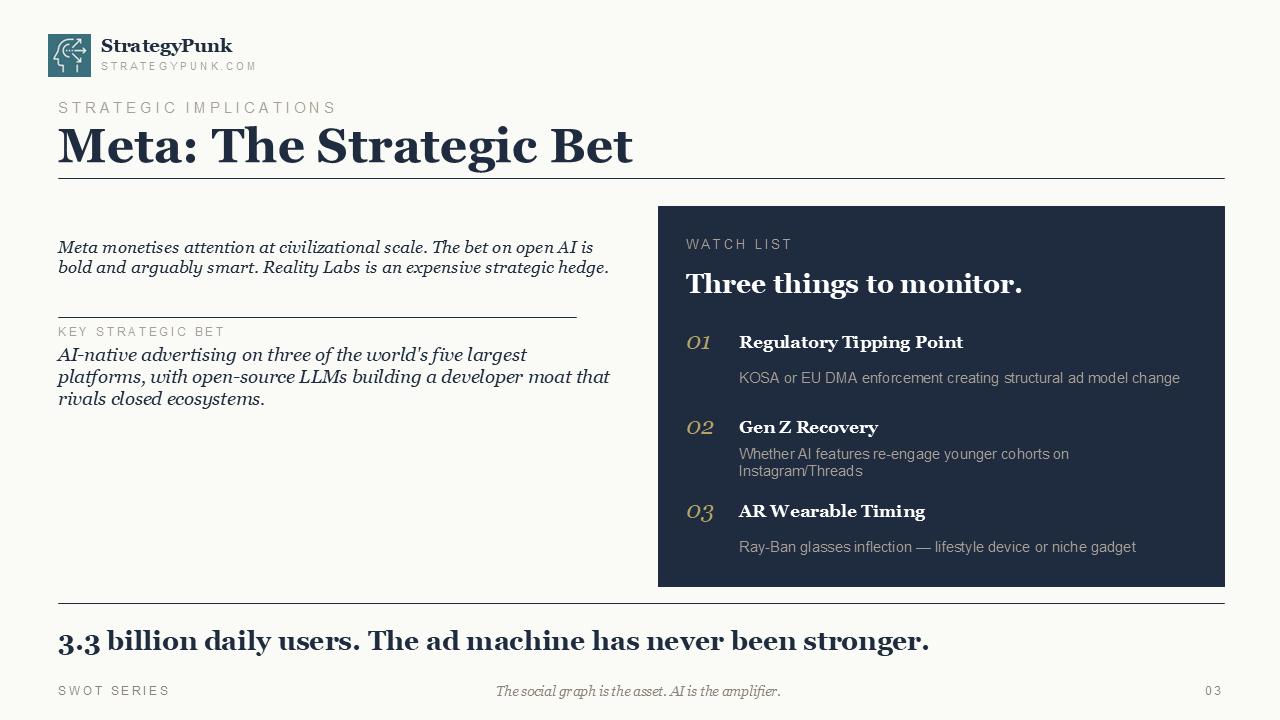
Position shapes possibility. As Meta navigates this transition, keep an eye on these three strategic bets:
- Regulatory Tipping Point: Will KOSA or EU DMA enforcement create a structural ad model change?
- Gen Z Recovery: Can AI features re-engage younger cohorts on Instagram and Threads?
- AR Wearable Timing: Are the Ray-Ban glasses a lifestyle device inflection point or just a niche gadget?
Meta’s bet on OpenAI is bold and arguably smart. They are leveraging their scale to commoditize the AI layer, ensuring their core ad business remains untouched.
What happens to the tech landscape if Meta’s open-source AI becomes the default operating system for the next generation of developers?
Download the Full SWOT Analysis
Want the complete strategic breakdown? Download the high-resolution Meta SWOT Matrix PDF below.